We left Thailand after a month of gorging ourselves on pad Thai, crispy pork, and mango sticky rice. Our next adventure was meeting Miles in the Philippines. As I started to research getting there, I began to notice a pattern — there weren’t a lot of direct flights, shocking I know. We have the time, so I figured, why not extend our little travel day into a weekend? Thus, our Singapore trip was born.
After Ryker (bless him) booked our tickets, I realized (like I have with every single place we’ve been and will most likely go) that I am an uneducated fool when it comes to Singaporean history or even modern-day shenanigans. Now that I’ve done a little bit of research, you, dear reader, will also be subject to what I’ve learned.
Singapore became an independent nation in the 1960s after a short stint of joining Malaysia, and promptly being kicked out — making it the only nation to have independence forcibly thrust upon it. We Americans romanticize independence, as many colonized nations do, but for Singapore it was a totally different story. They were stripped of the safety a larger nation-state can provide. They had zero natural resources — actually negative natural resources — as there was no means of obtaining drinking water or anywhere to grow food. So they were now reliant on Malaysia, a nation that had just kicked them out, to export food and water. Singaporeans knew they needed to attract foreign dollars to survive, and man did they do a good job.
It was a multipronged approach. One: create a national identity by building government-subsidized housing and a beautifully crafted transportation system to move all those people around. Singapore is great at using the carrot-and-stick approach — in the case of transportation, the carrot was very cheap, clean, safe, and reliable public transport; the stick was making it very expensive to drive a car (the 2026 RAV4 in the US would be $34,000, while in Singapore the same car would run you $170,000, and after paying that massive sum you don’t even own the car — just a certificate of entitlement letting you drive it for 10 years, after which the car goes to scrap or you pay again).
Two: Singapore has a very interesting geopolitical location; it sits at the mouth of the Strait of Malacca, meaning all the world’s shipping traffic going west to east or east to west passes through here. Singapore set out to make themselves the place to stop, becoming a tax haven with very loose import and export taxes, as well as implementing a world-class education system so that Singaporeans could become very attractive candidates as nations thought about setting up APAC headquarters. Over years and years, Singapore (with no natural oil deposits) became the 3rd biggest refiner of oil in the world, turning itself into a very effective gas station, as well as a major investment hub.
Three — and something I find very interesting — is that Singapore is very anti-corruption. The country’s officials are paid very well, but also face the death sentence if found to be taking bribes or engaging in corruption. In fact, Singapore routinely carries out the death penalty — 17 times in 2025 alone, mostly for drug trafficking. Upon entering the country, large posters warn of the consequences of smuggling. Gum is also illegal; you can’t buy or sell it in Singapore, which contributes to the city’s spotlessness. Following that carrot-and-stick methodology, things are balanced out with the legalization of prostitution (though it’s strictly regulated) and a lucrative gambling industry (though it’s more targeted at tourists than locals).
All of this is to say that Singapore is a shining example of starting from nothing and, through ingenuity, wit, forward-thinking policies, and a carrot-and-stick approach, becoming a major player on the world stage. Singapore today is on par with London and New York as a leader in financial markets. They have one of the highest GDP per capita in the world at $161,000 USD (compared with $90,000 in the USA), one of the best healthcare systems in the world, and from 1966 till now have gone from overcrowded slums to a 90% homeownership rate.
The Start
Our travels started like many travels do: with figuring out how on earth to get to the airport. In this case we were a little rushed and took a Grab (kind of like Uber in Asia) to the train. You’d think, with our big backpacks, we would’ve ordered a car — and you would be oh-so-wrong. No, we ordered two scooters for this 12-minute ride. Should’ve been simple and easy; I’d been seated behind Ryker with our backpacks numerous times at this point. There is a key difference between riding behind your husband and riding behind a stranger: with my husband, I can wrap my arms around him and lean forward, shifting the weight of my 35L pack off my core. Etiquette in Thailand for scooters dictates that the rider grab a bar right behind and under the seat. This over-explanation is so you can truly visualize the situation. I was on a scooter with a heavy backpack, leaning back to hold on — that’s a full, intense core workout I was not prepared for. The only thing that kept me on that bike was the fear of the embarrassment of falling off; I was not going to be that tourist. Meanwhile, Ryker — with his rock-solid core and defined six-pack — was just chilling and taking selfies. I was sweating bullets, but I did not embarrass myself (at least on that front) and have never felt so relieved to jump off a scooter.
Many hours, a lounge, and a flight later, we touched down in Singapore. The Changi Airport is beautiful and famous for the “Jewel” — a massive waterfall into a jungle room.
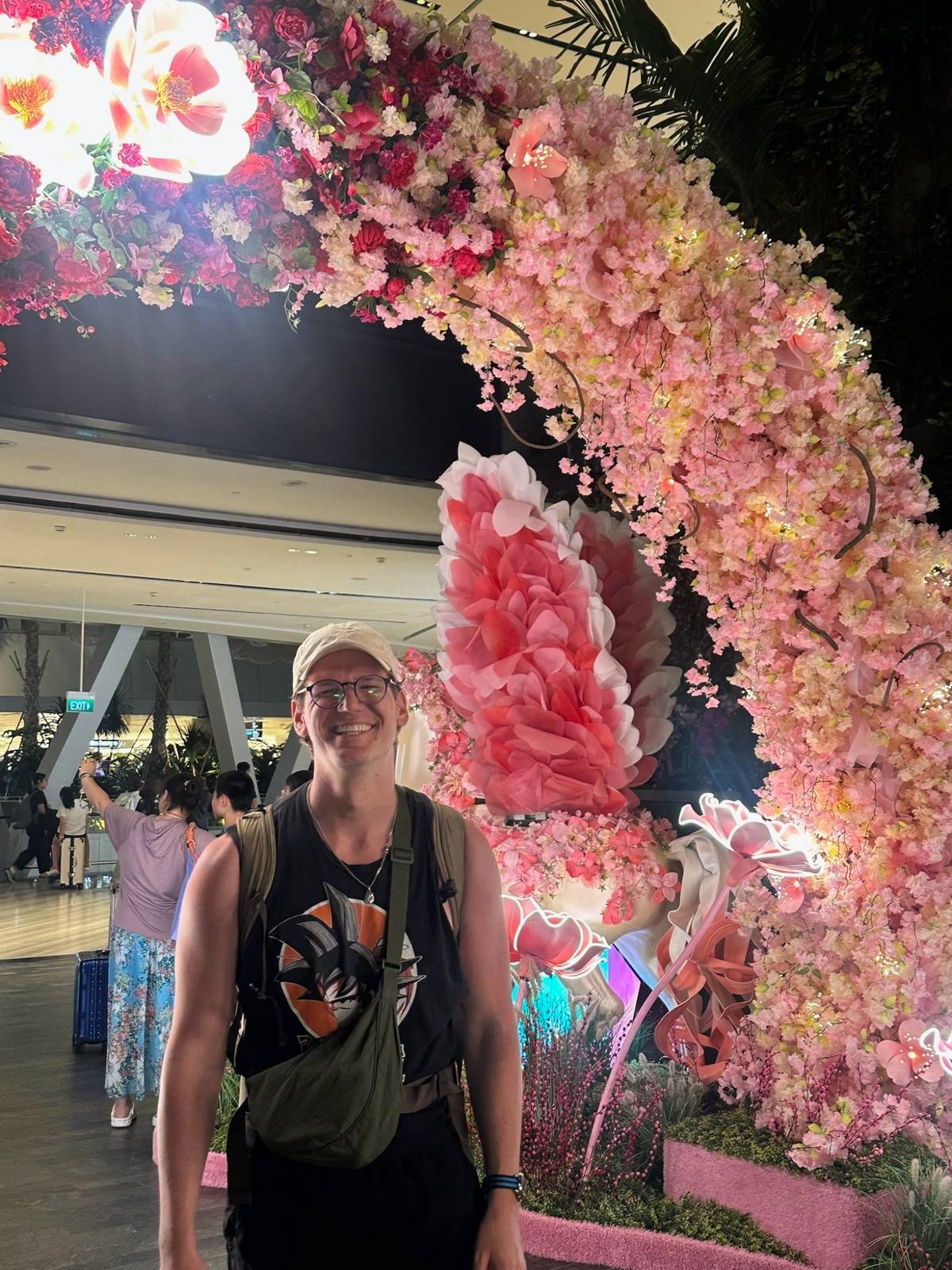
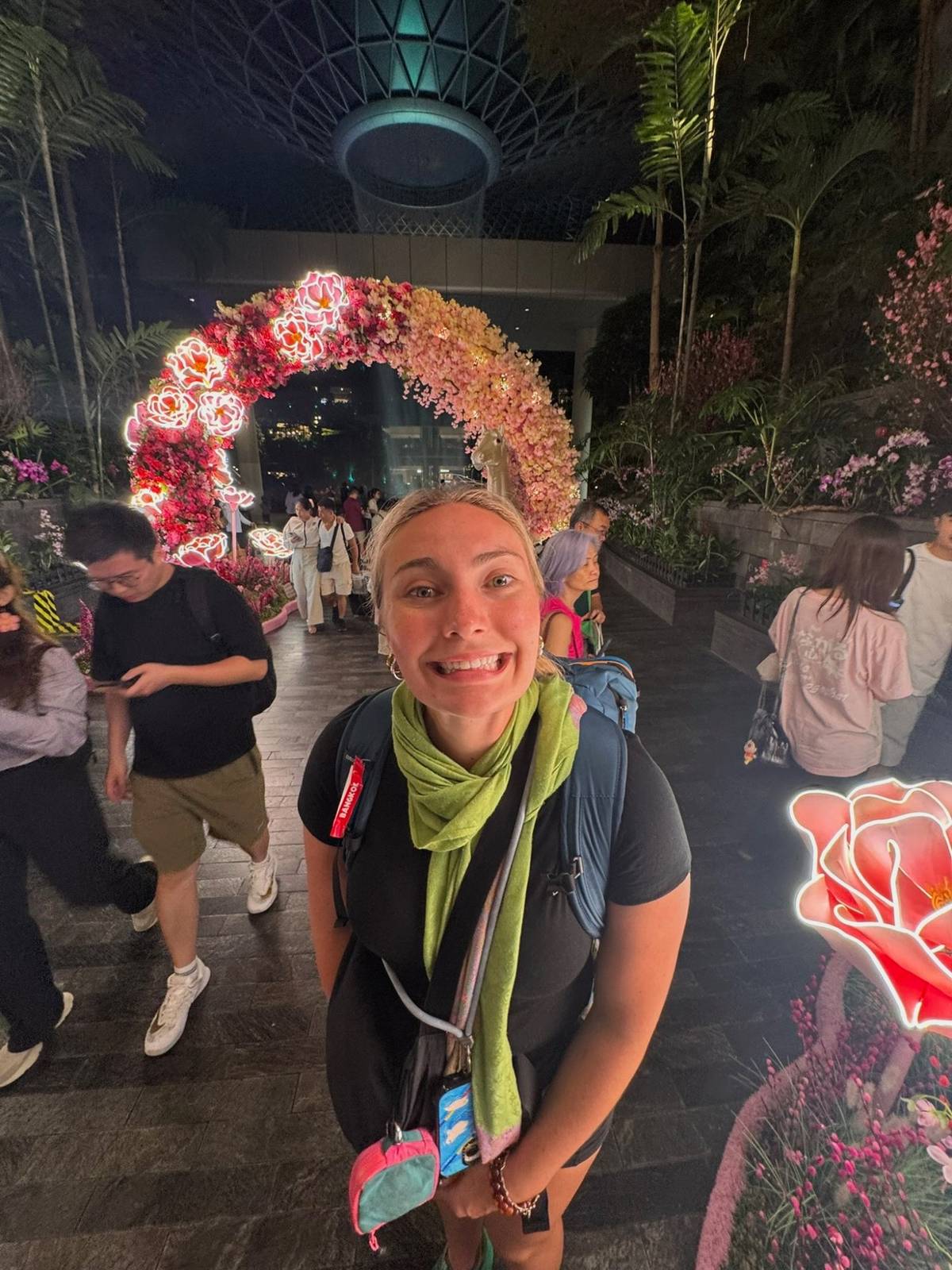
We were staying in a capsule or pod hotel in the Boat Quay area (right downtown, walking distance to most everything we wanted to see). Off to bed we went to gather some sleep before our whirlwind of exploring.
Chinatown & Little India
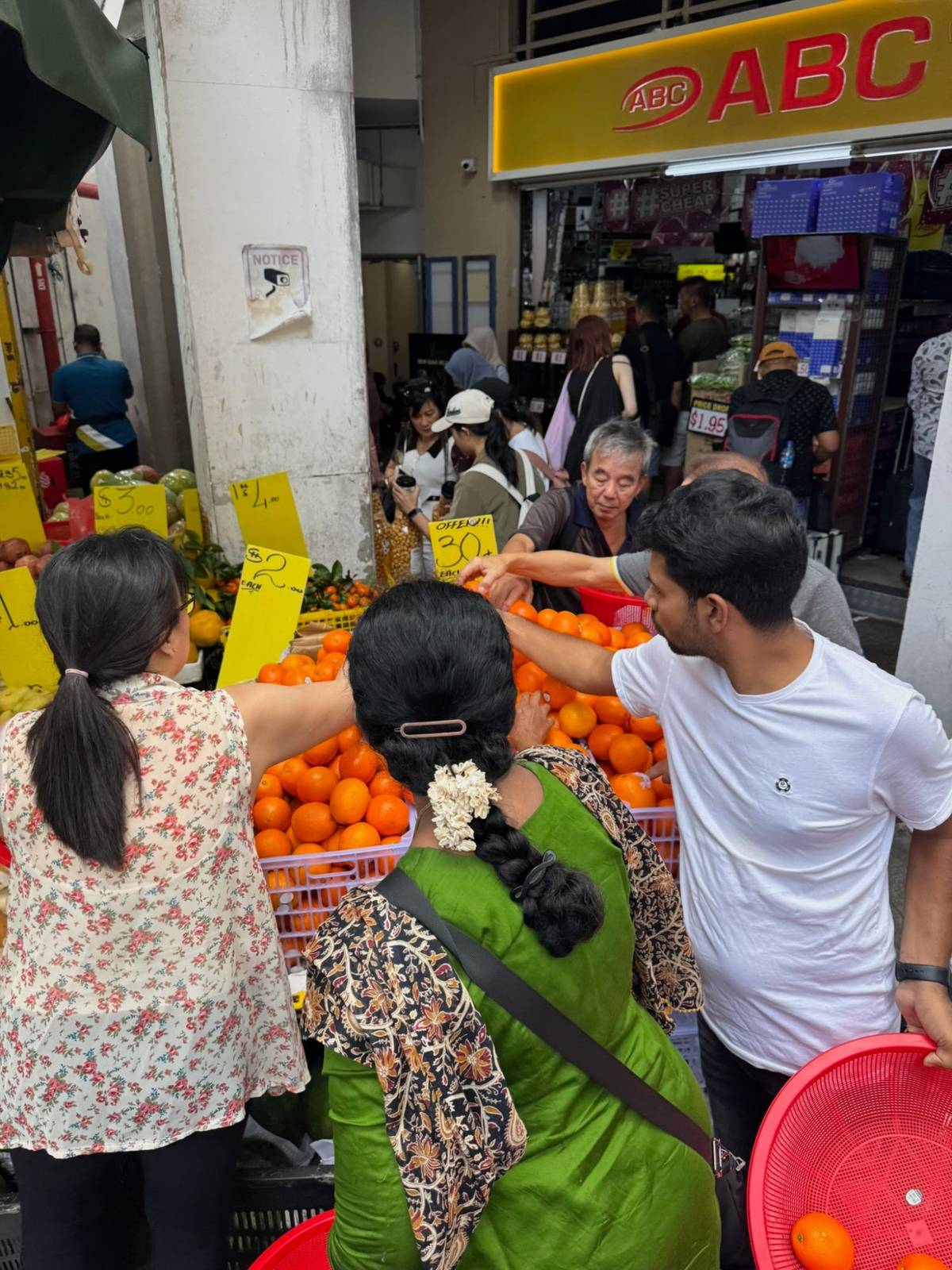
Singapore has no shortage of amazing food options — the city boasts three Michelin-starred restaurants (the entire USA only has 14). Ryker and I are not on a three-star budget, but luckily for us there are many hawker stalls to delight the taste buds. We started in Chinatown at the Maxwell Centre. Chinese New Year meant over 70% of the stalls were closed, which actually benefited us by making it easier to choose. We tried a handmade dry noodle dish with a pork sauce that had the perfect al-dente bite, and a scrumptiously seasoned chicken and rice. Across the city sits Little India, where we got a taste of lamb shank biryani.
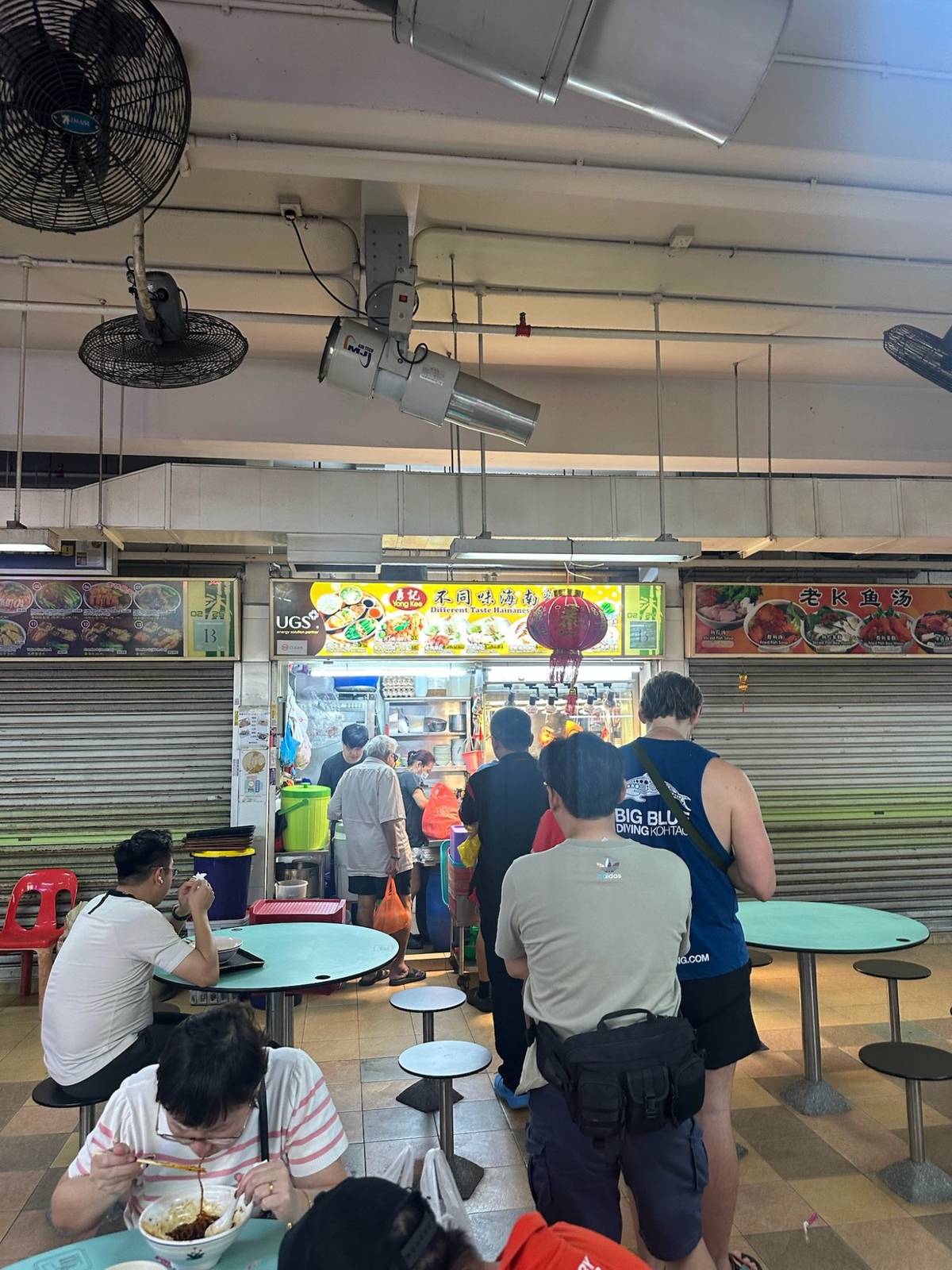
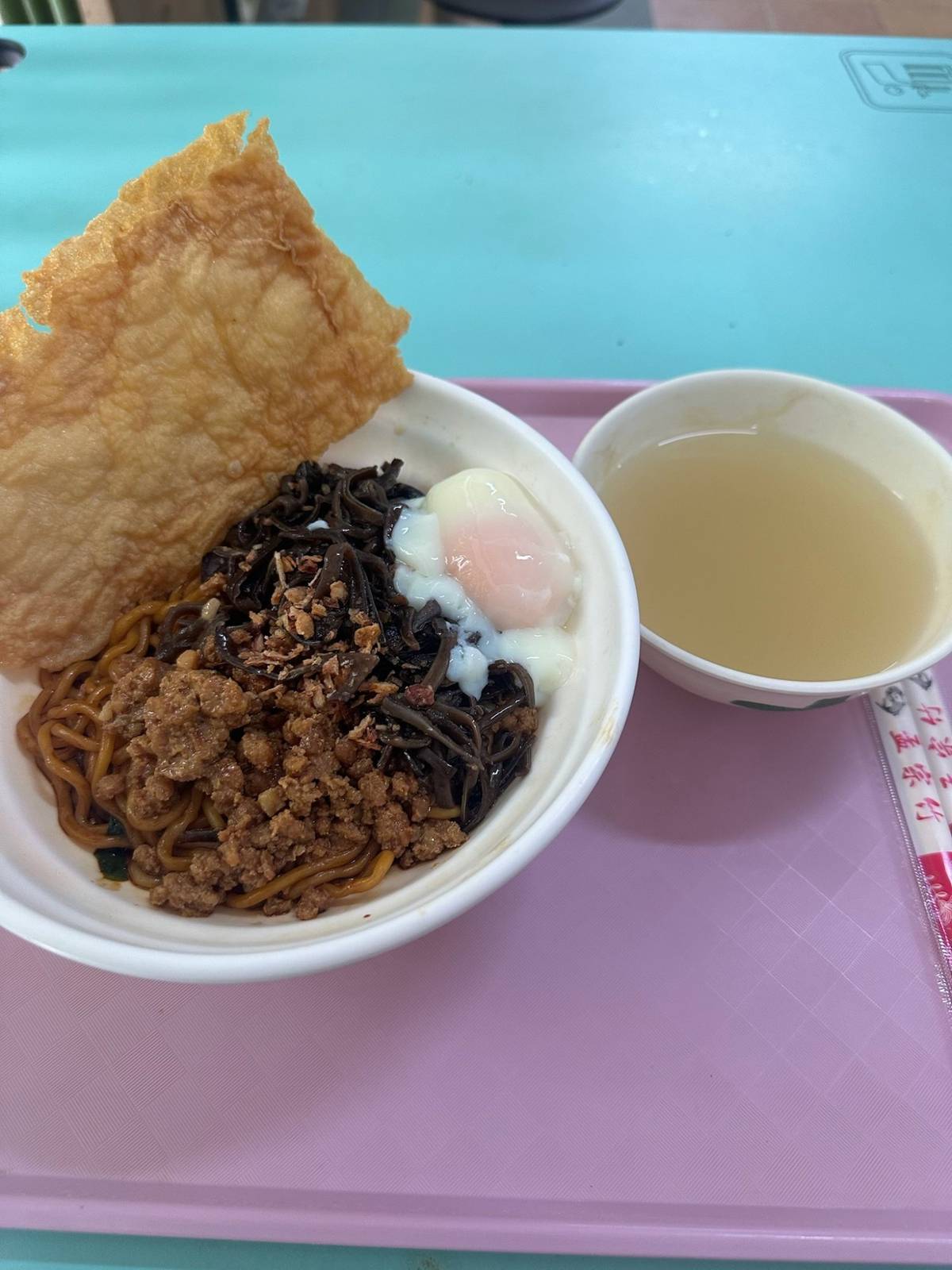
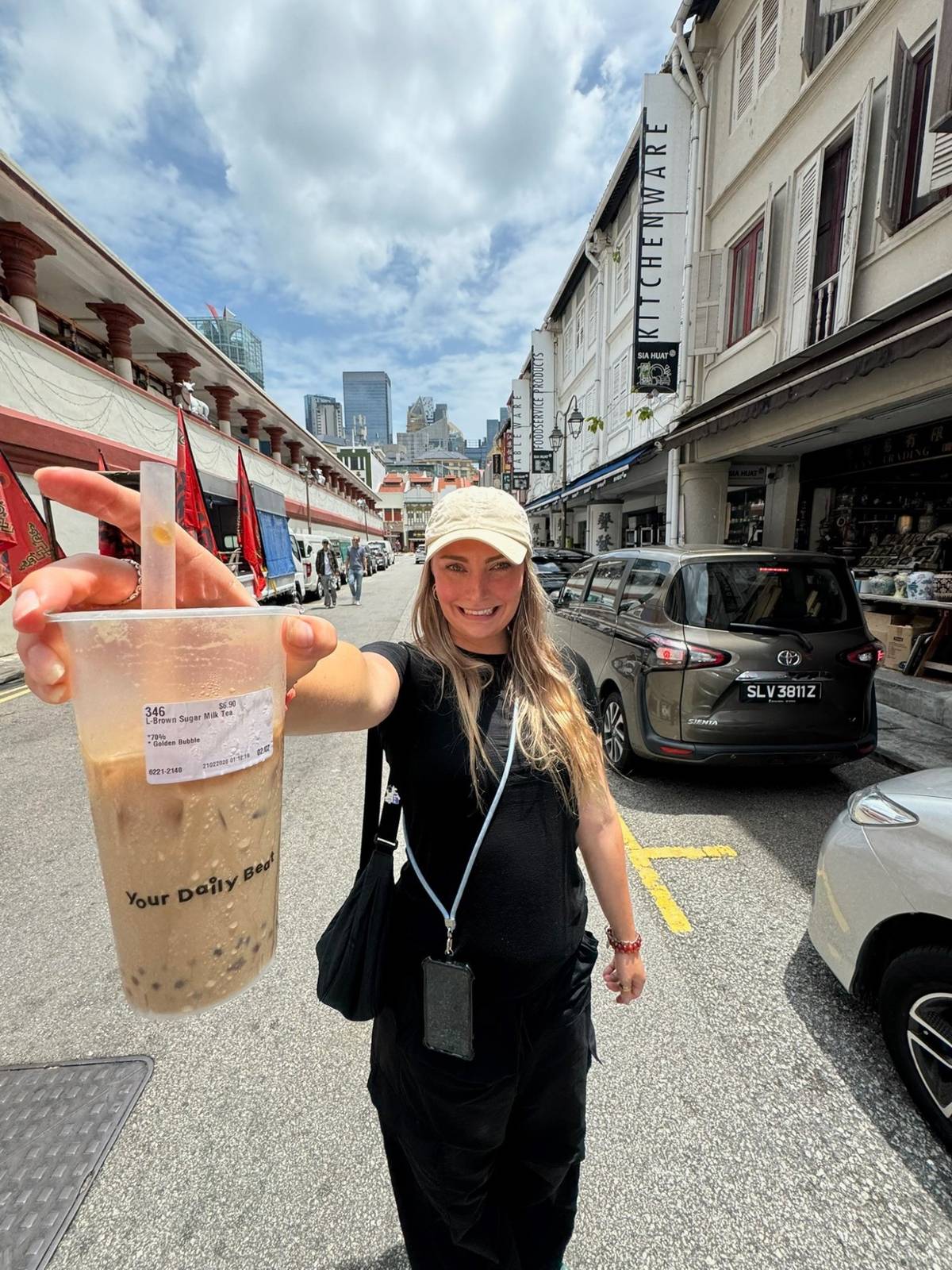
While both were fun to check out, Ryker had his fan-girl moment over Luckin Coffee — a Chinese company that was massively on the rise in the past couple of years, opening tons of stores and even a couple in the US. Luckin’s stock reflected their success, going up and to the right — exactly what investors want to see. However, it all came crashing down when it turned out that Luckin was blatantly lying about all their numbers, publishing false reports, and misleading shareholders; the stock plummeted by 80% overnight. For market reasons (not caffeine ones), Ryker was insistent that we taste the forbidden bean. My Butter Coffee reminded me of Wisconsin, and Ryker’s Sparkling Strawberry Americano was bursting with flavor. Shockingly good drinks to come from such a slimy company.
Orchard Road
Next on our list was Orchard Road. You know this street — it exists in every major city on the planet: the one with wide boulevards lined with the usual designer shops — Gucci, Prada, Chanel. We went here for a different reason: to check out Design Orchard, a shop housing up-and-coming Singaporean designers. The clothing was beautiful and colorful, exotic and edgy, a little weird — everything I love about clothes. As Ryker dragged me from the shop, tummy rumbling, I vowed to come back one day with a bigger pocketbook and an empty suitcase.
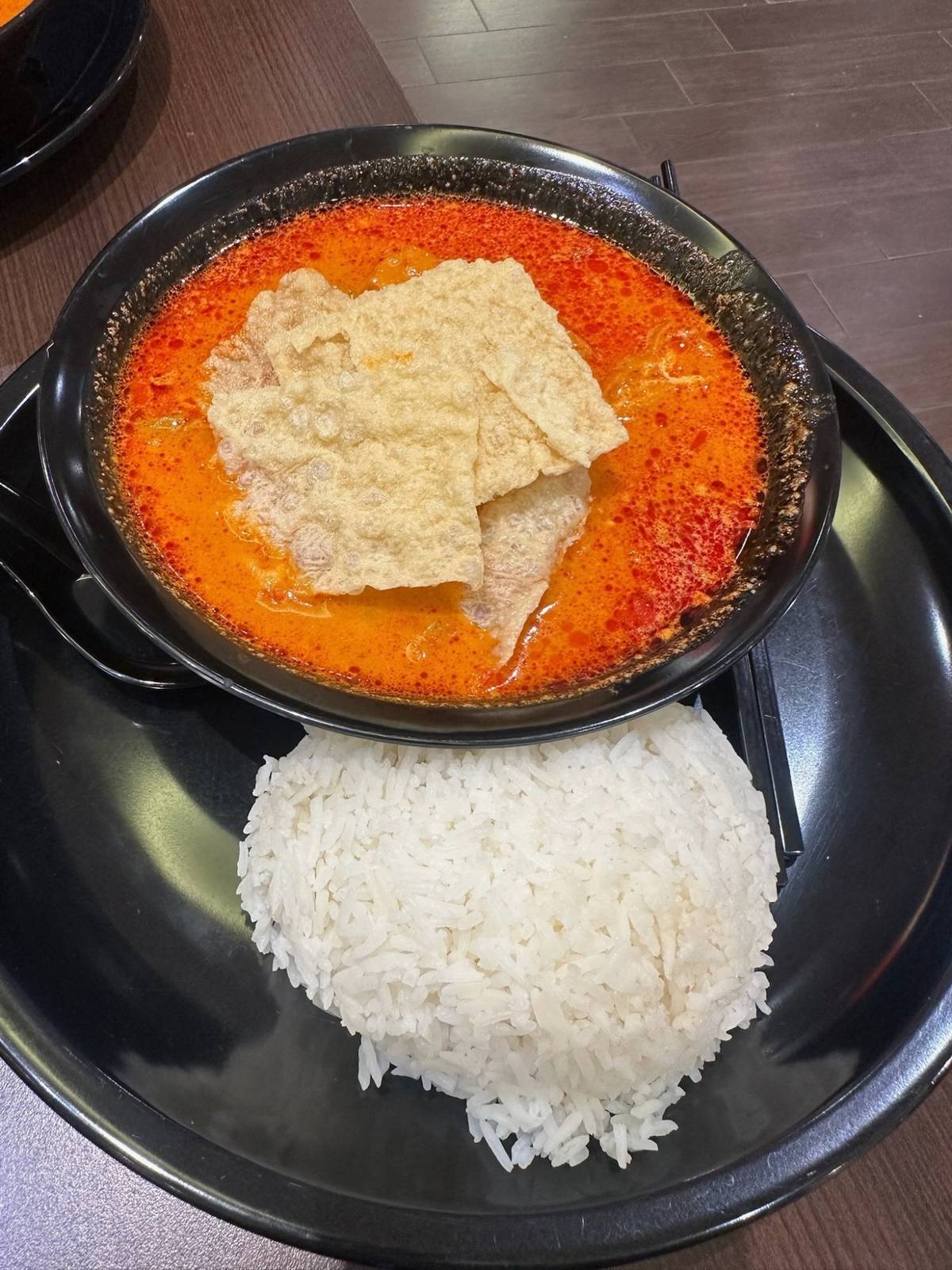
As you all remember, Ryker got his prize Seiko watch in Japan, and ever since I have been writhing with jealousy. I had my sights set on a complementary watch, the Seiko Ice Alpinist — a limited-edition watch released in October of last year in only a few countries, Singapore being one of them. I had my fingers and toes crossed there would be one left for me. So we set off through a maze of a shopping mall to find the Seiko store. Twenty minutes later and no closer to our destination, we made a pit stop at the food court — where I had my best meal of the Singapore trip (Ryker strongly disagrees on this point, but that man will eat anything). I went completely silent on my first bite: Nana’s Curry with potatoes and rice (listed on the Michelin Guide, which means Michelin agrees with me on this point). I was silent for the whole meal; it was that good. Food deserving to be savored, with full focus on every bite — and in the basement of a mall, no less.
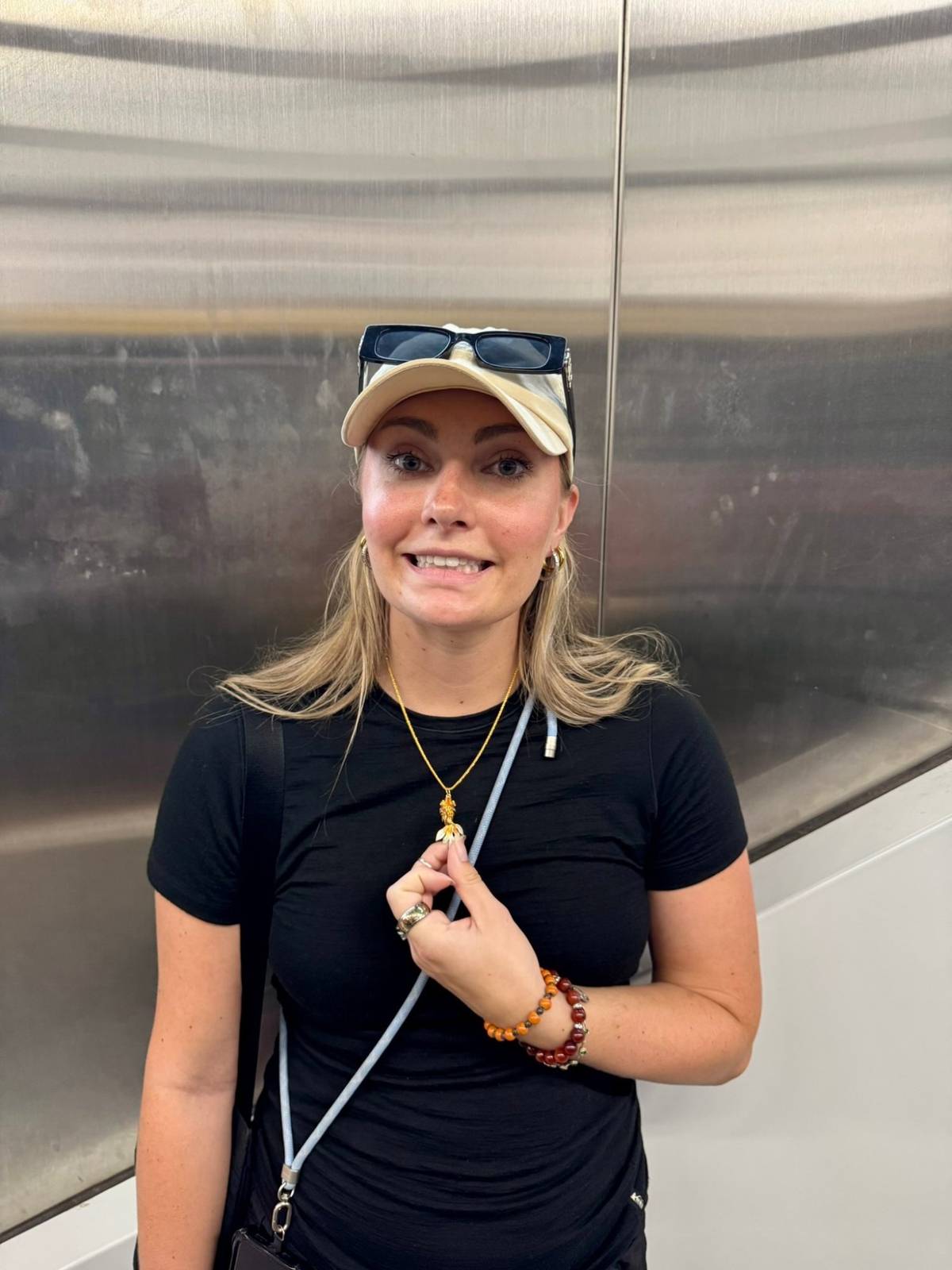
After tracking down the Seiko store, I got some devastating news: the watch I wanted was sold out and had been for months. If I wanted one, it was up to the secondhand market now — a brutal place. After my devastating defeat, I tucked tail back to the hotel, nursing my emotional wounds for the rest of the night.
Light Shows
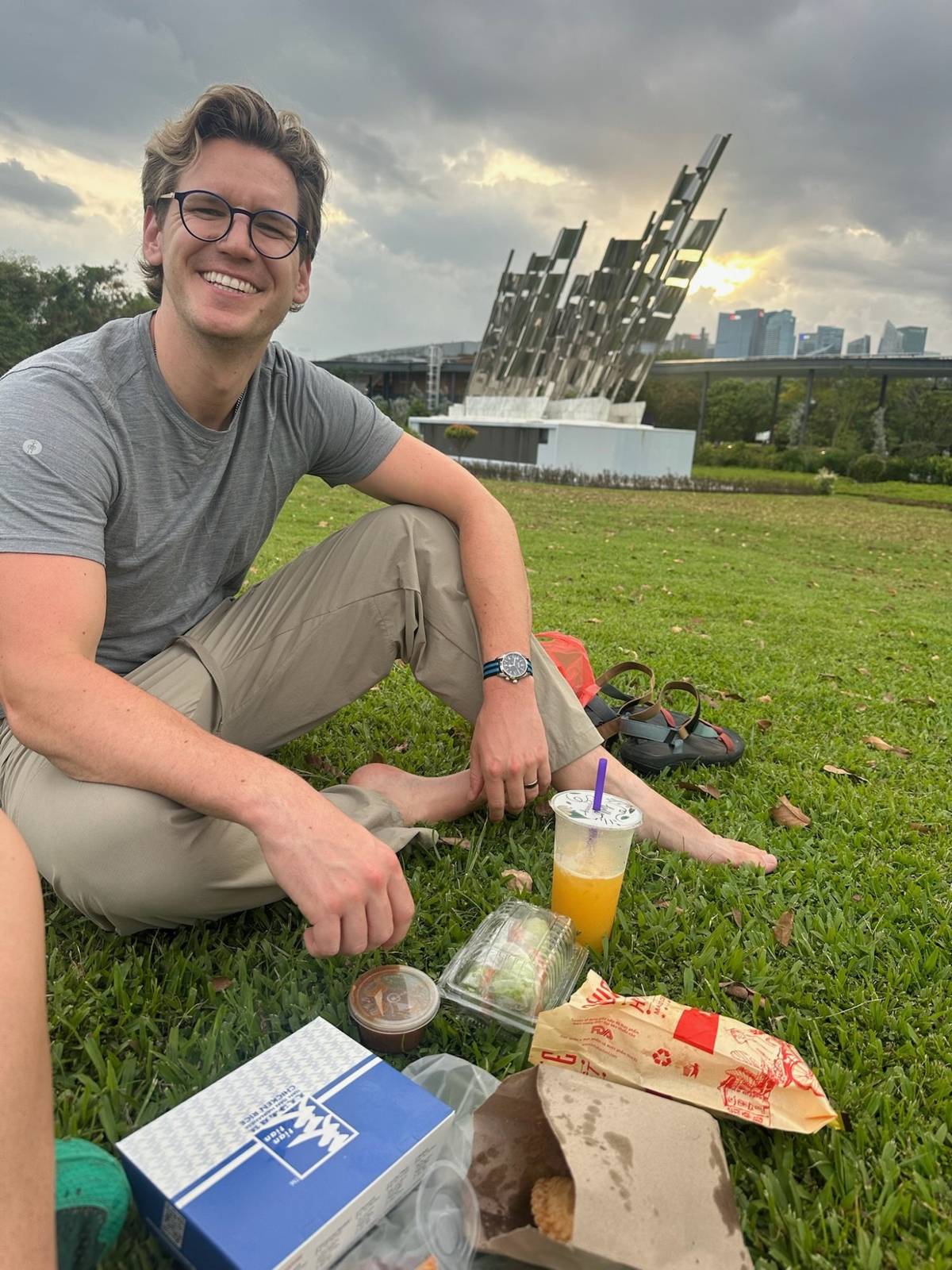
On our final day we wandered the streets collecting scrumptious bites for a picnic by the water. We ate on a grass field, the ocean breeze keeping us cool, before heading to Singapore’s main tourist attraction: Gardens by the Bay.
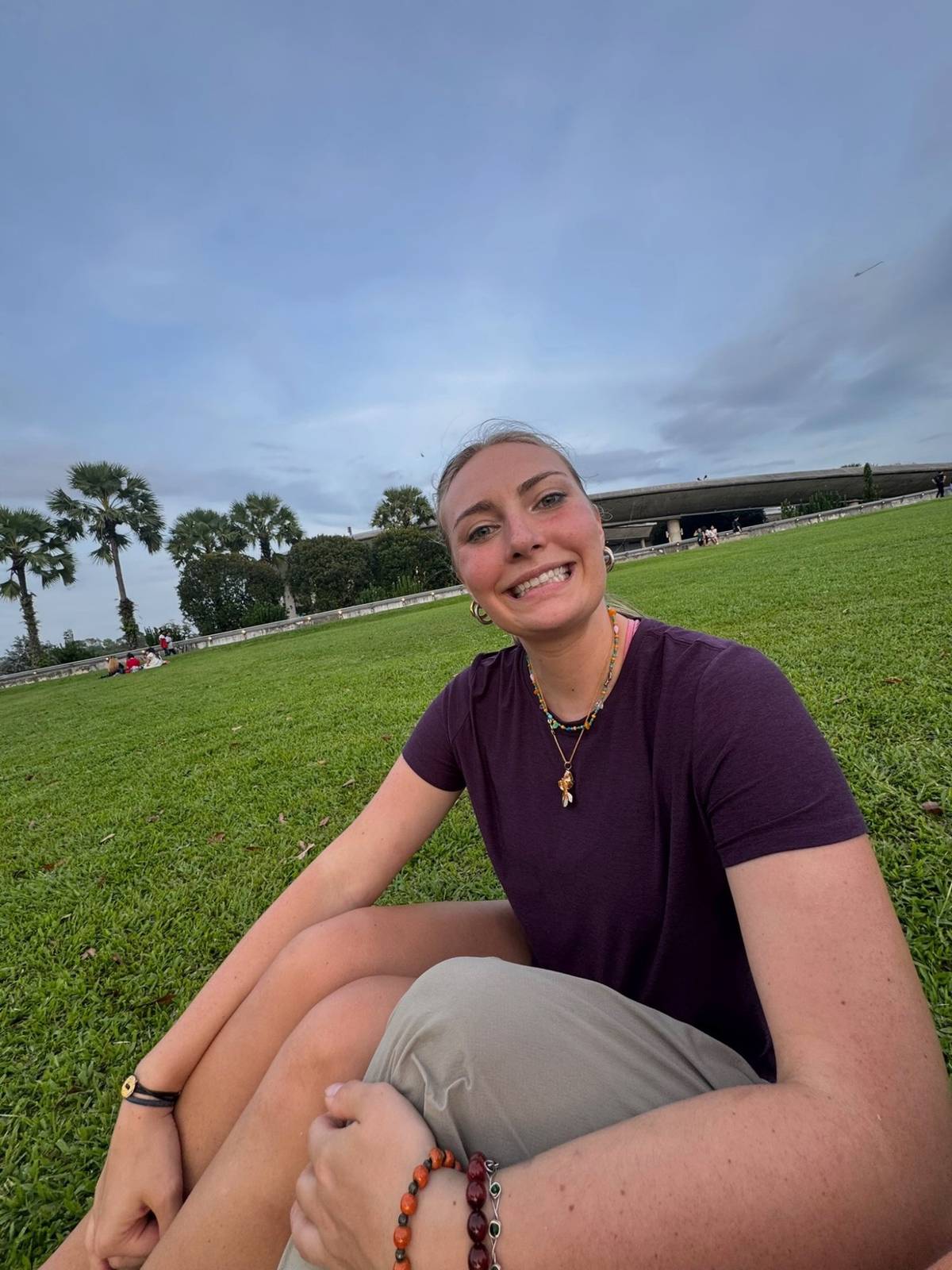
After the picnic we wandered the Marina Bay waterfront — hard to miss Singapore’s most iconic skyline.
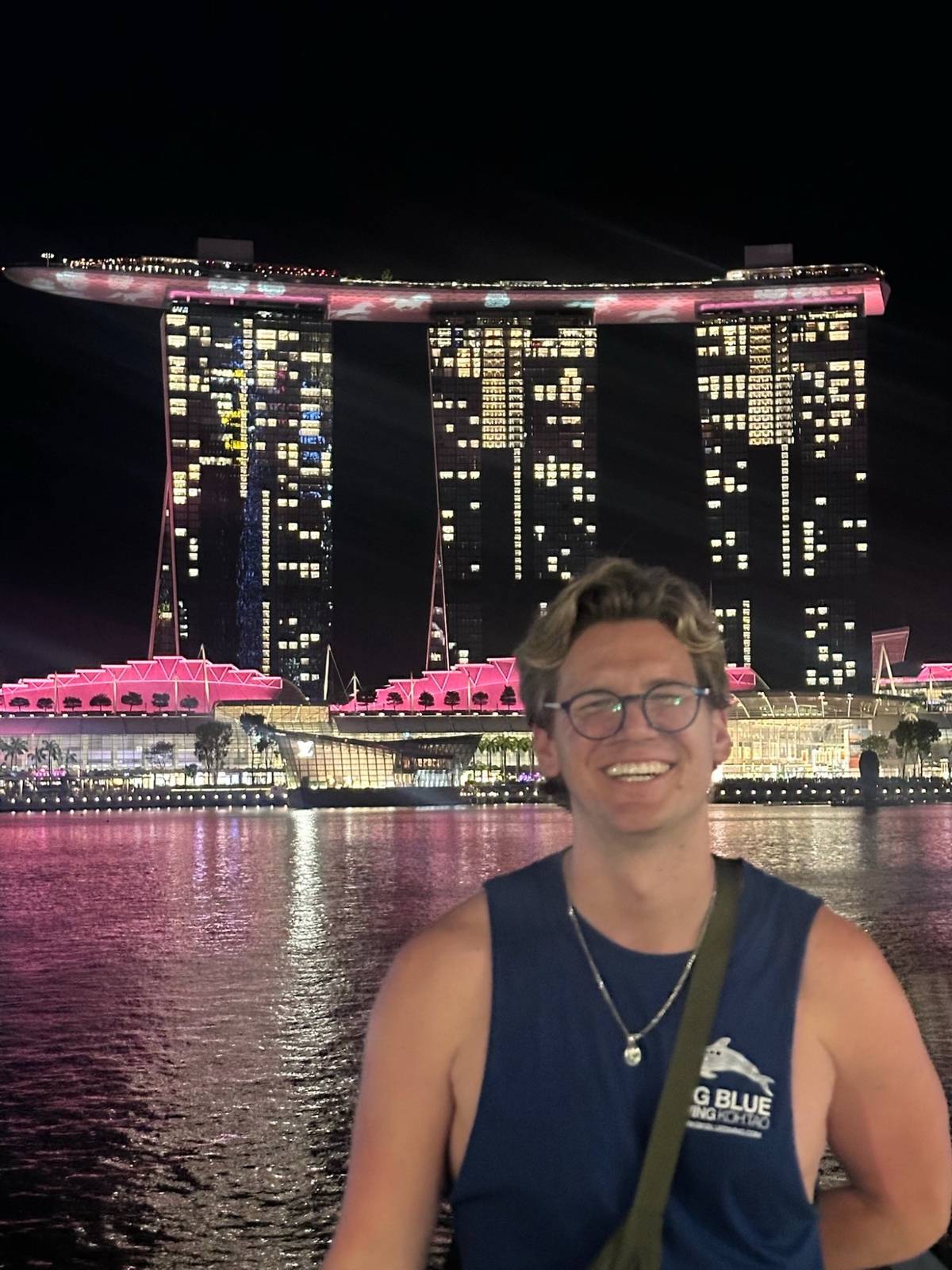
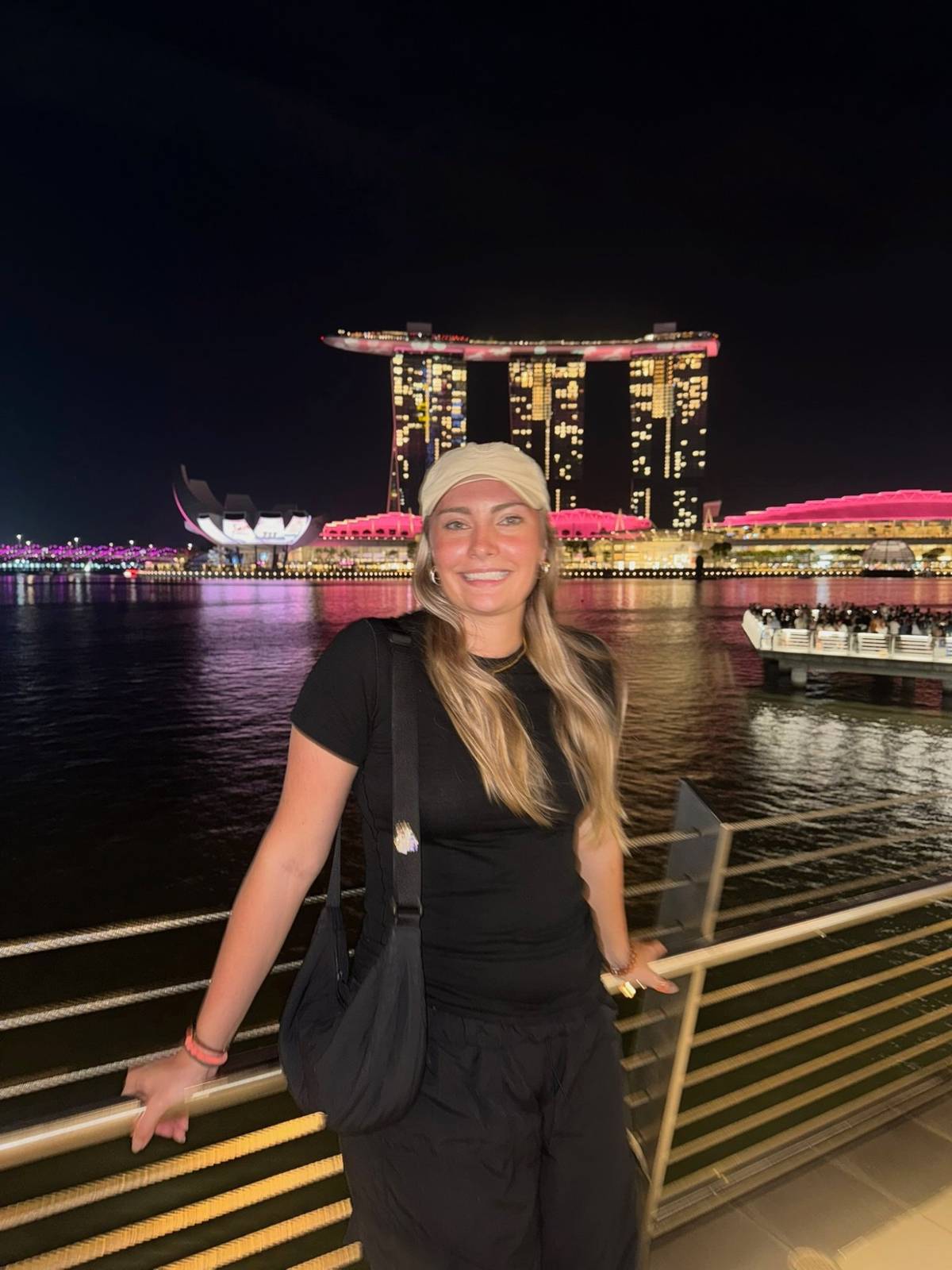
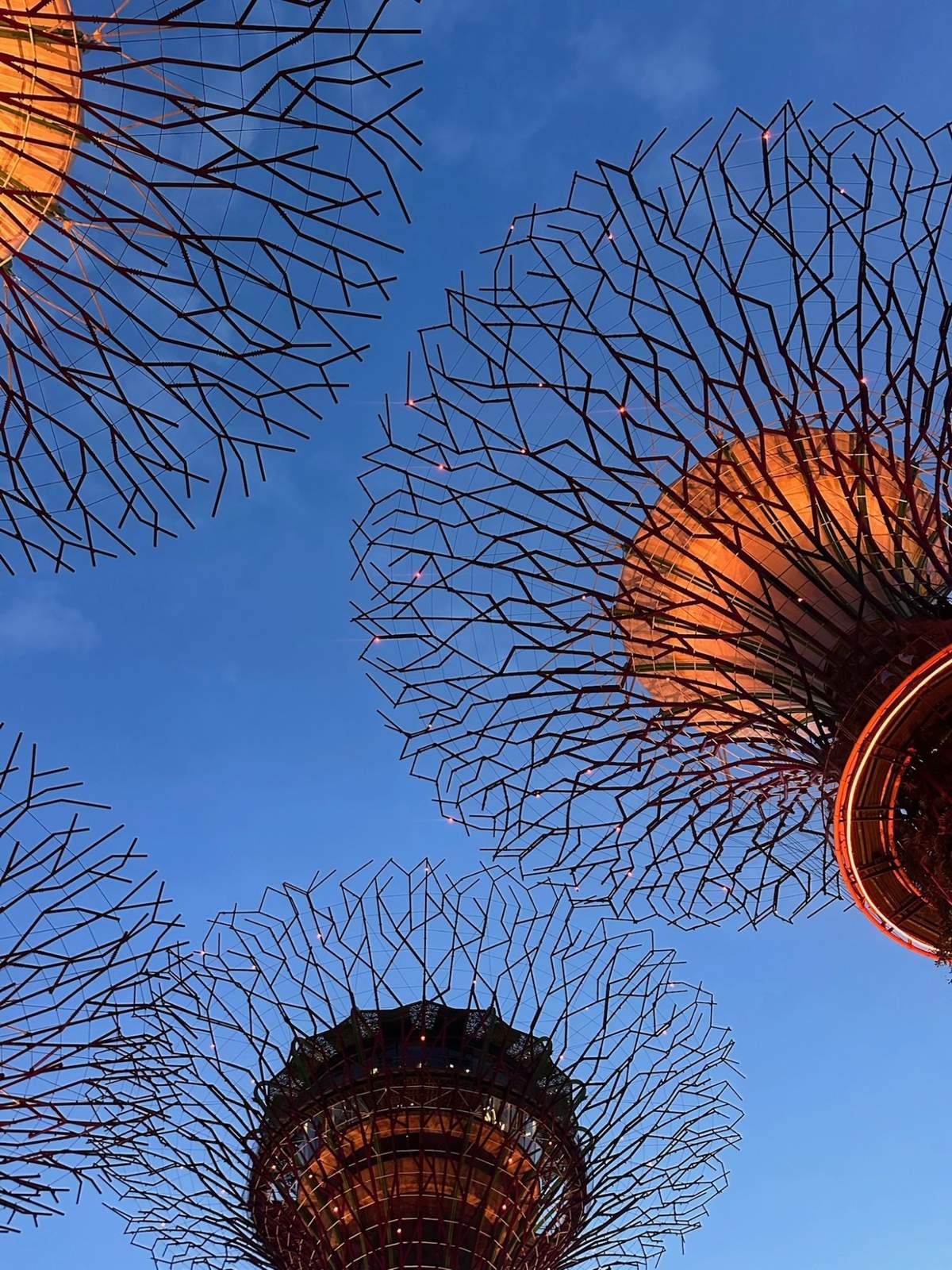
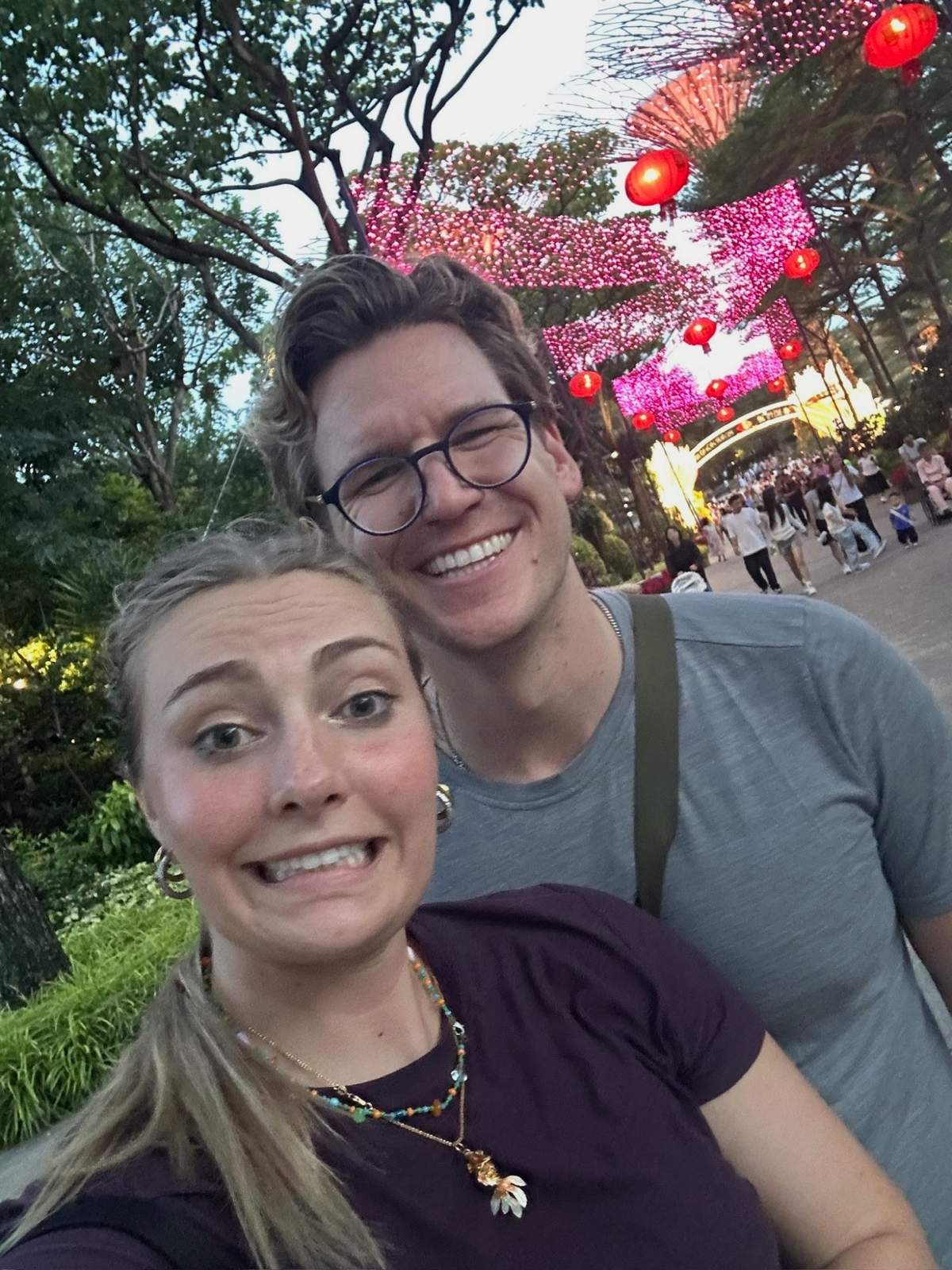
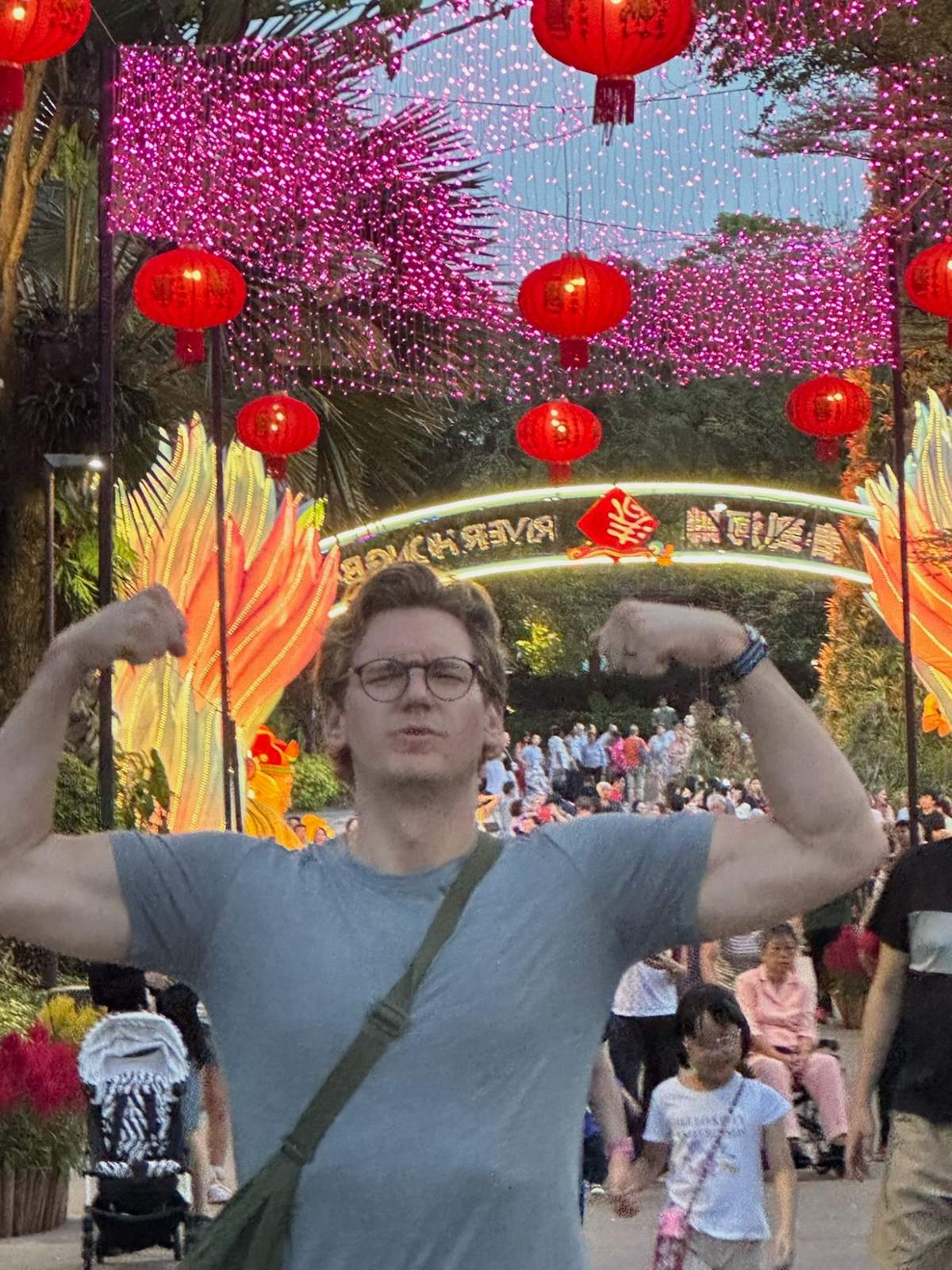
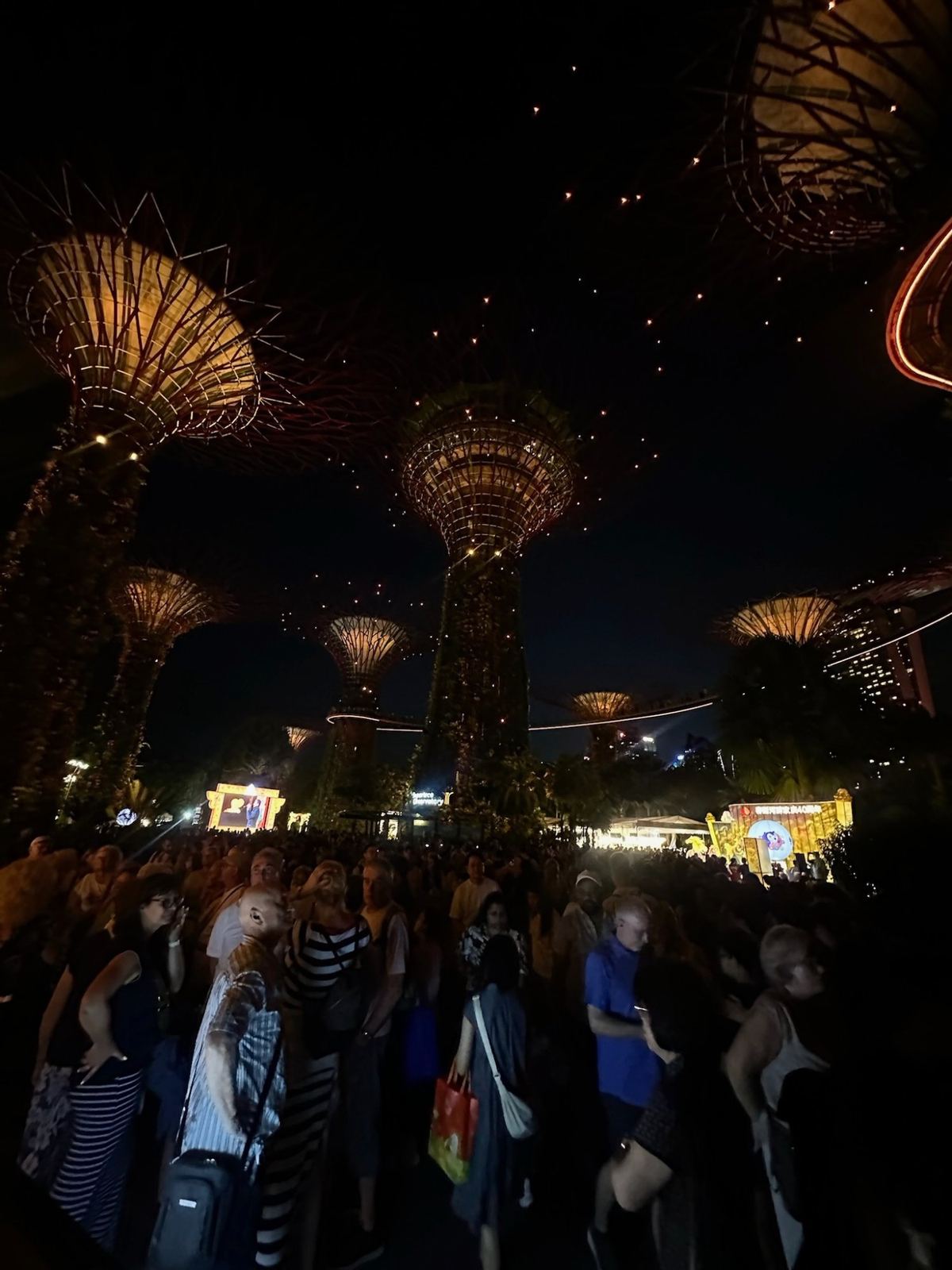
Famous for its towering columns that branch out at the top resembling trees — metal giants with vines creeping up their bodies — they perform a nightly show. Given that this happens every night, I was shocked when we arrived (early, I might add) to see swarms of people being shepherded into long lines. We had the pleasure of accidentally arriving on a night of a massive festival to send off the Chinese New Year; half the city had made their way here. We snuggled in with everyone else, on the ground, necks craned upward, and watched the show begin. Quite lovely — a light show choreographed to classical music, an impressive display of money, art, and technology.
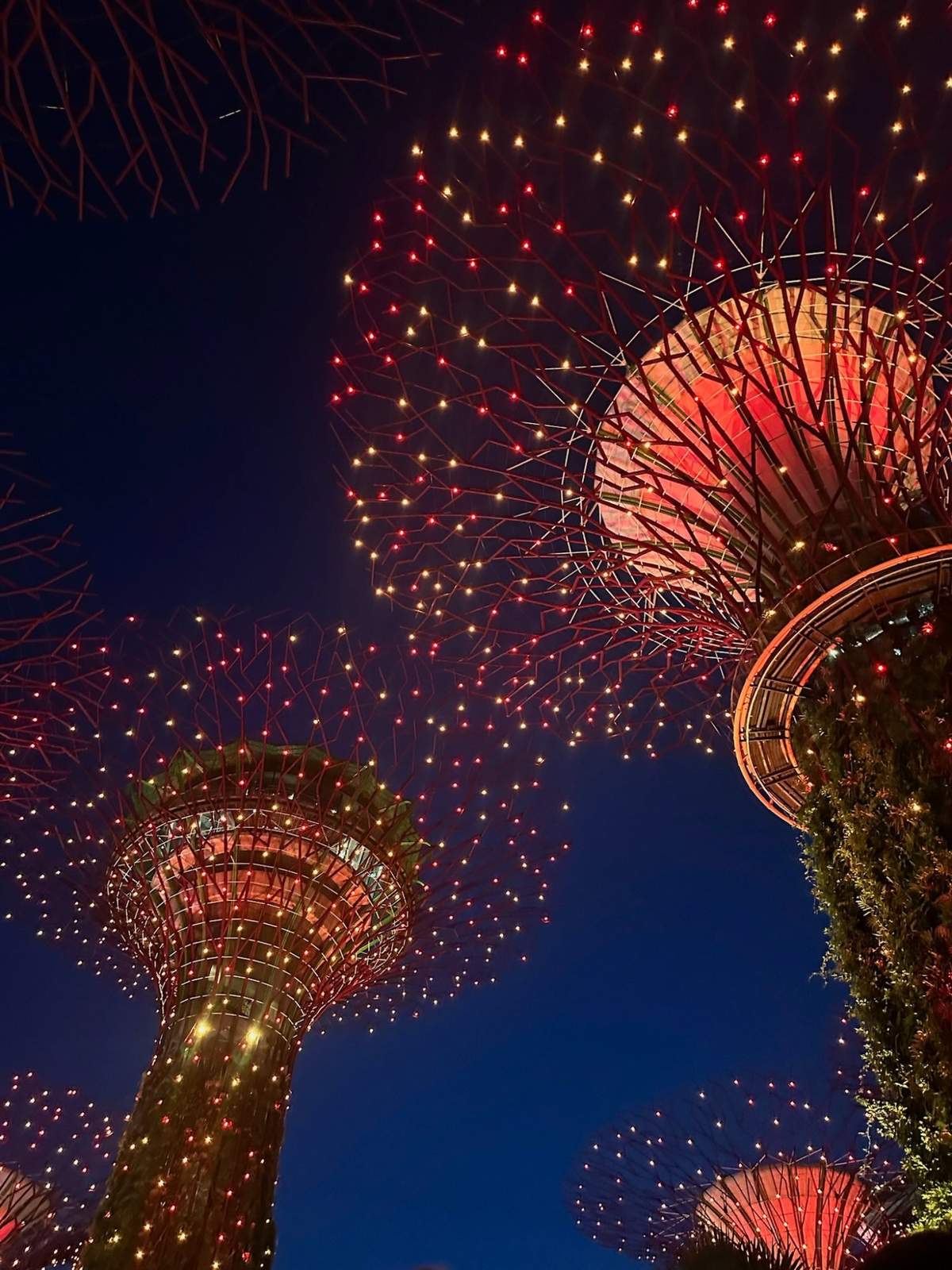
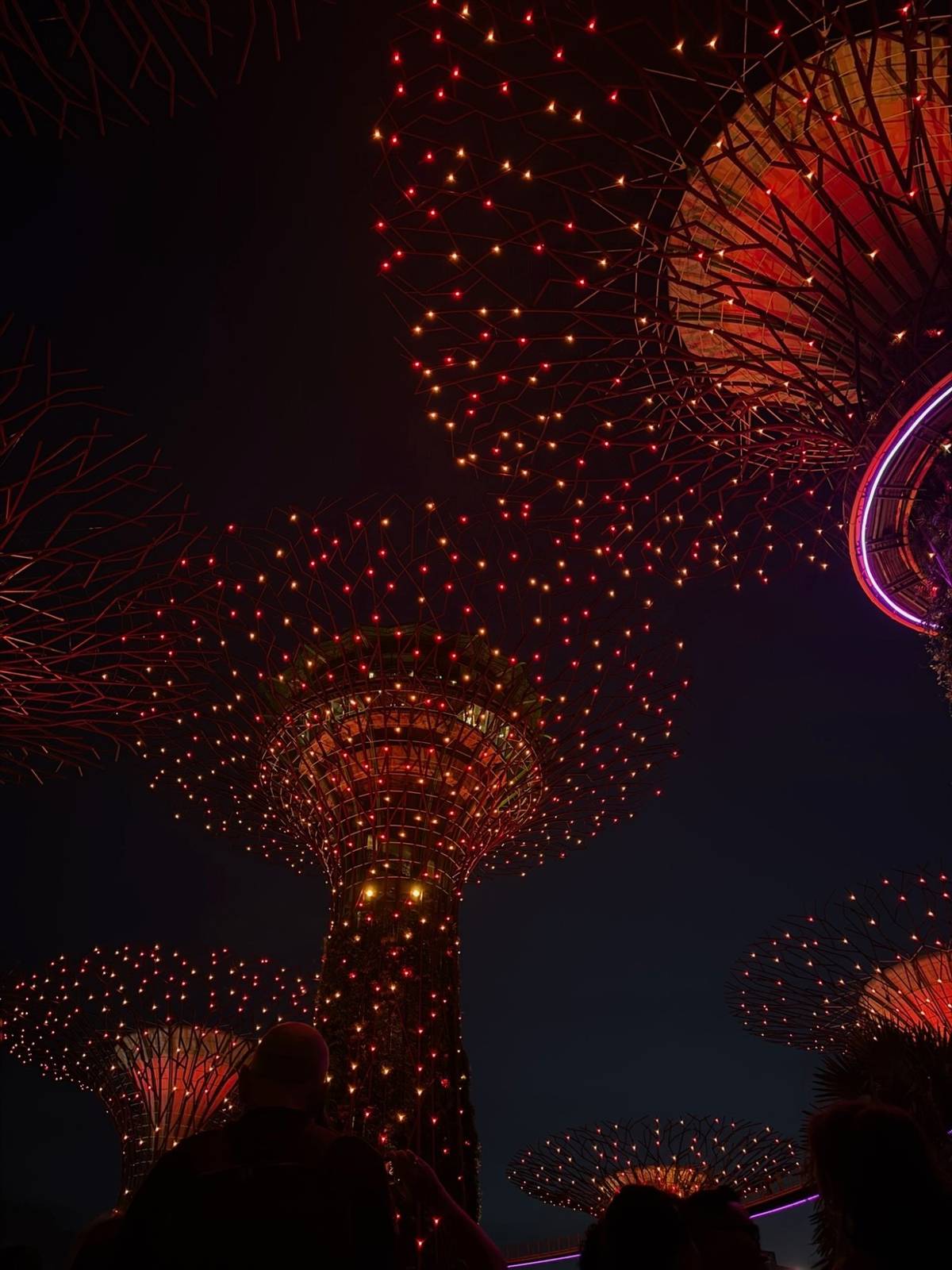
We enjoyed Singapore and didn’t have enough time to do everything I wanted to, but we packed a lot into our 48-hour layover. Ryker and I are finding that the more cities we see, the more they start to look the same. For me, it’s learning about the history, economics, and modern-day politics that makes visiting a city interesting; otherwise it’s just another shopping trip with good food. We are getting better and better at choosing destinations and allocating time to activities. This traveling thing truly does have a big learning curve. As some Albert guy once said, “The more I learn, the more I realize how much I don’t know.”
Until next time ❤️